
Laguna Verde
The first stop from Puerto Varas: an emerald lagoon with a short universal-access trail, free of charge. It is 500 m from our base; everything is in our guide to Laguna Verde in Ensenada.
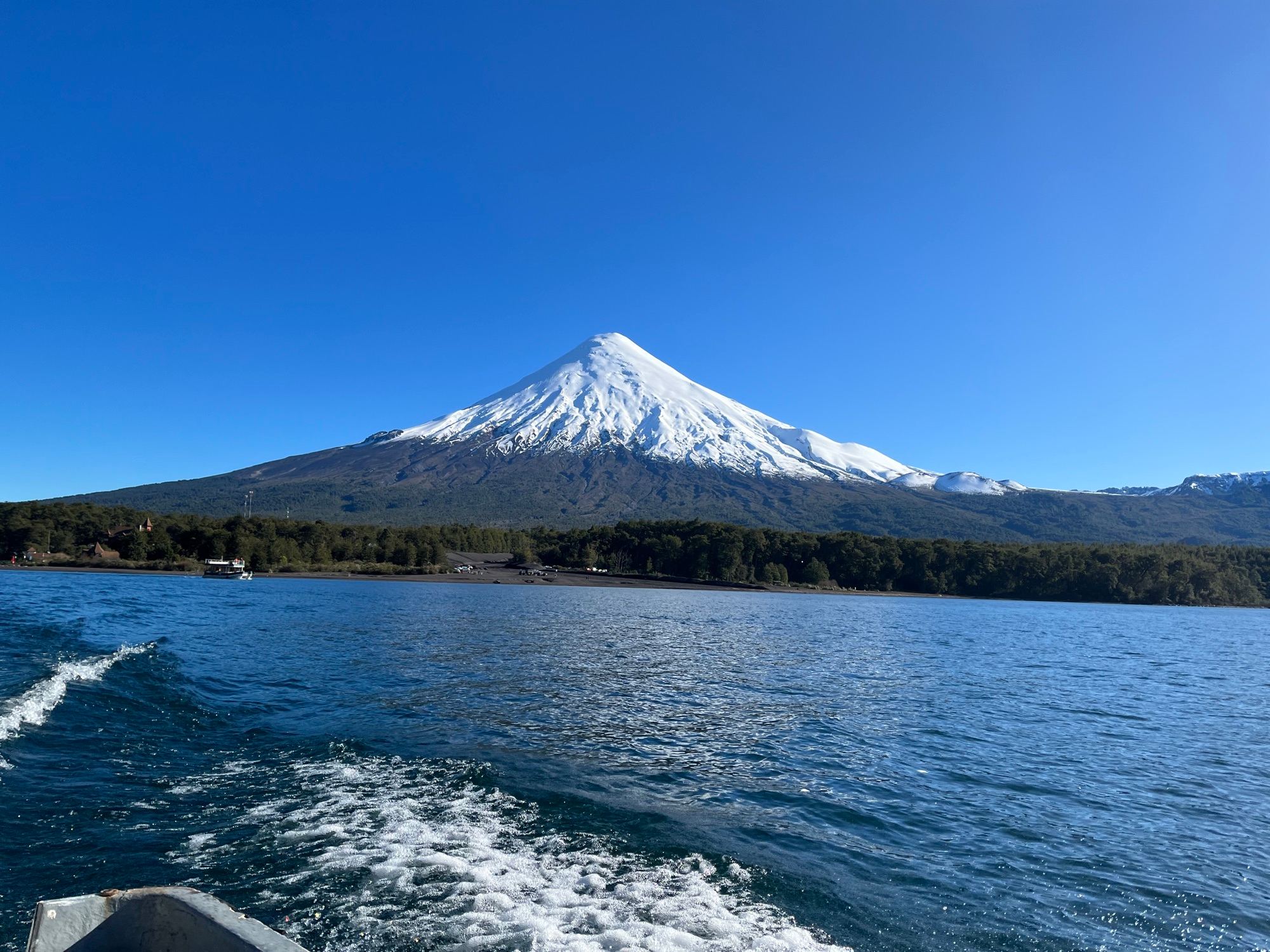
Vicente Pérez Rosales National Park is the oldest national park in Chile. It protects Osorno Volcano, Lake Todos los Santos, the Petrohue Waterfalls and the Valdivian rainforest between the volcanoes. It begins in Ensenada, 44 km from Puerto Varas, where our base is. This guide covers its areas, trails, rules and how to explore it.
Quote on WhatsAppQuick factsUpdated 25 October 2026
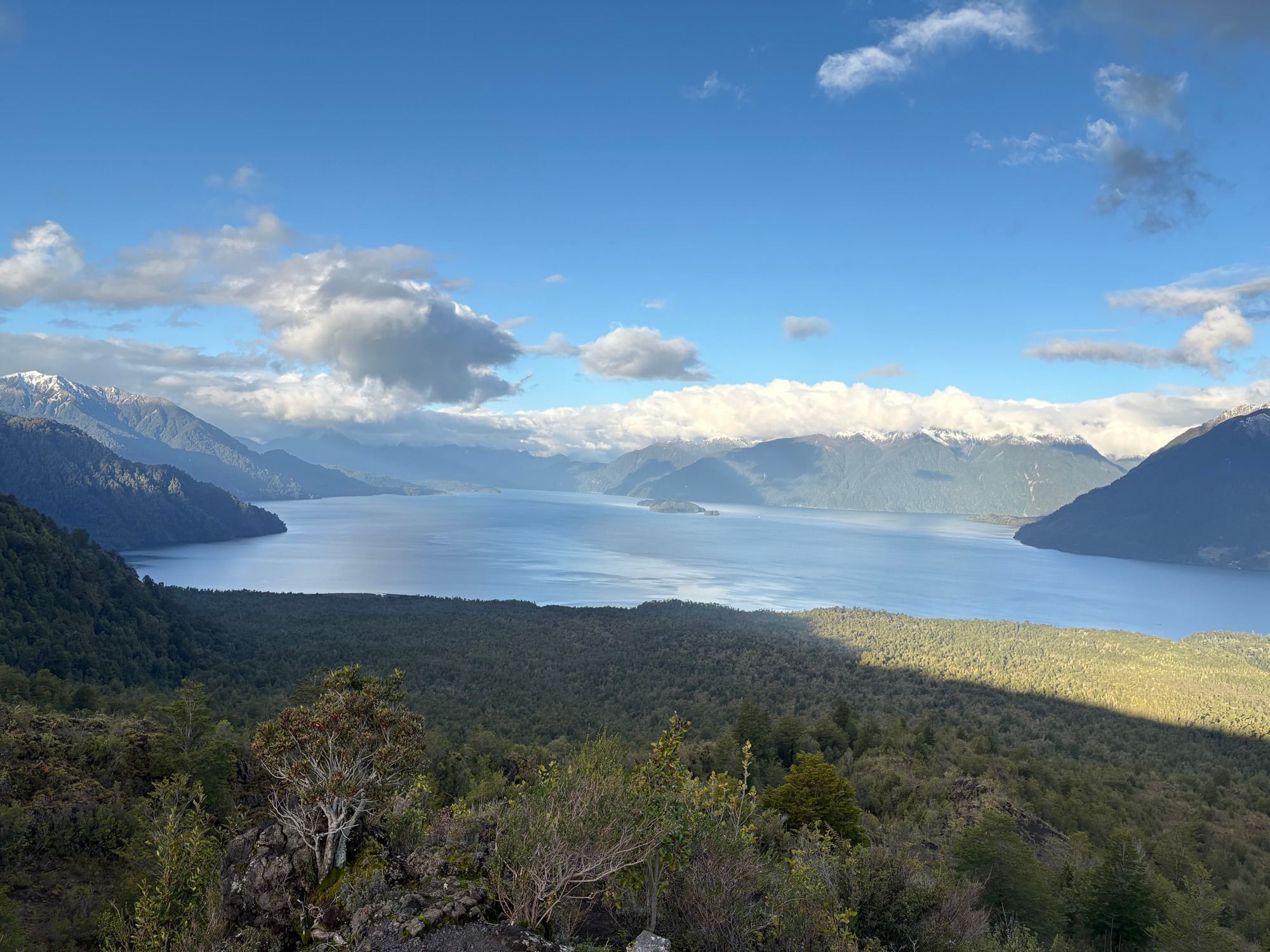
The park was created on 17 August 1926 and is the oldest in Chile. It covers 253,780 hectares in the Los Lagos Region, from 50 m above sea level on the shore of Lake Llanquihue to the 3,491 m summit of Mount Tronador, on the border with Argentina. It is run by CONAF, the national forest service, and is part of the Temperate Rainforests of the Southern Andes Biosphere Reserve.
To the east it borders Nahuel Huapi National Park in Argentina, and to the north Puyehue National Park. Together they form a continuous protected area of about 15,000 km². In 2024 it received 565,665 visitors.
Vicente Pérez Rosales was the Chilean government agent in charge of German settlement in the south, in the mid-19th century. The settlers made their homes around Lake Llanquihue, at the doorstep of today's park.
The most visited places are on the road from Ensenada to Petrohué, Route 225-CH.
The first stop from Puerto Varas: an emerald lagoon with a short universal-access trail, free of charge. It is 500 m from our base; everything is in our guide to Laguna Verde in Ensenada.
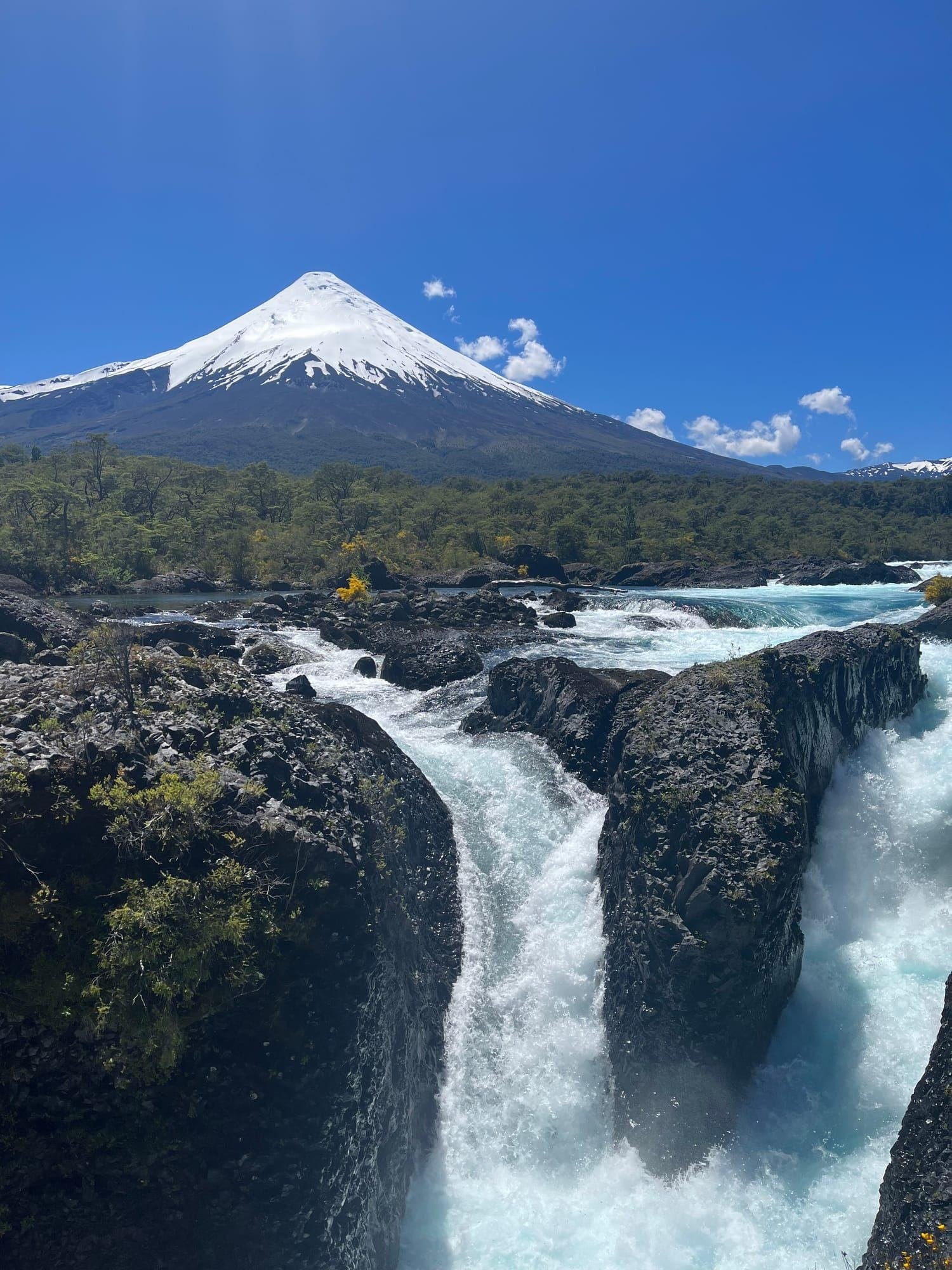
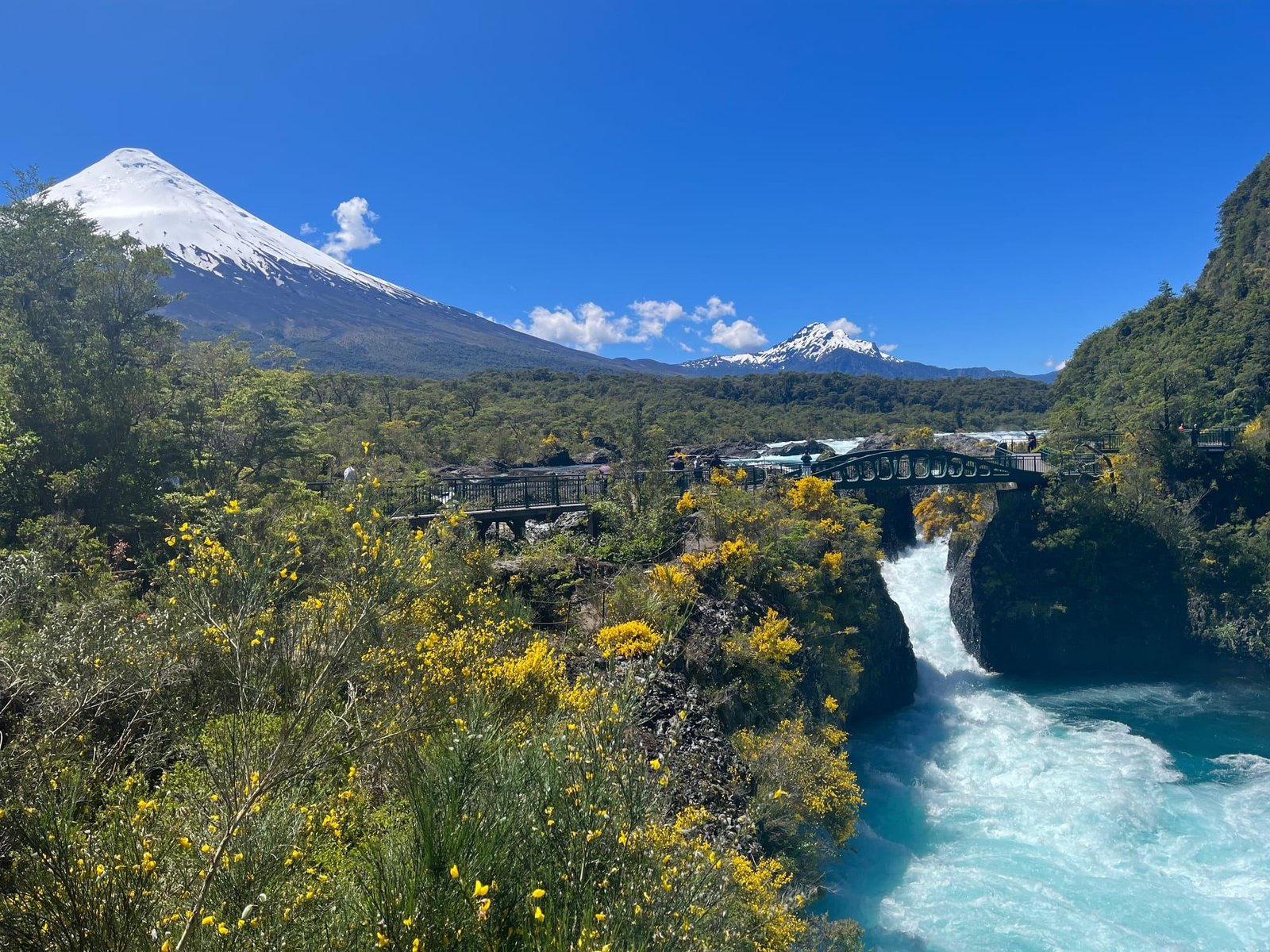
Falls on the Petrohue River over lava from Osorno, the most visited area of the park and where the entrance fee is checked. Hours, prices and trails are in our guide to visiting the Petrohue Waterfalls.
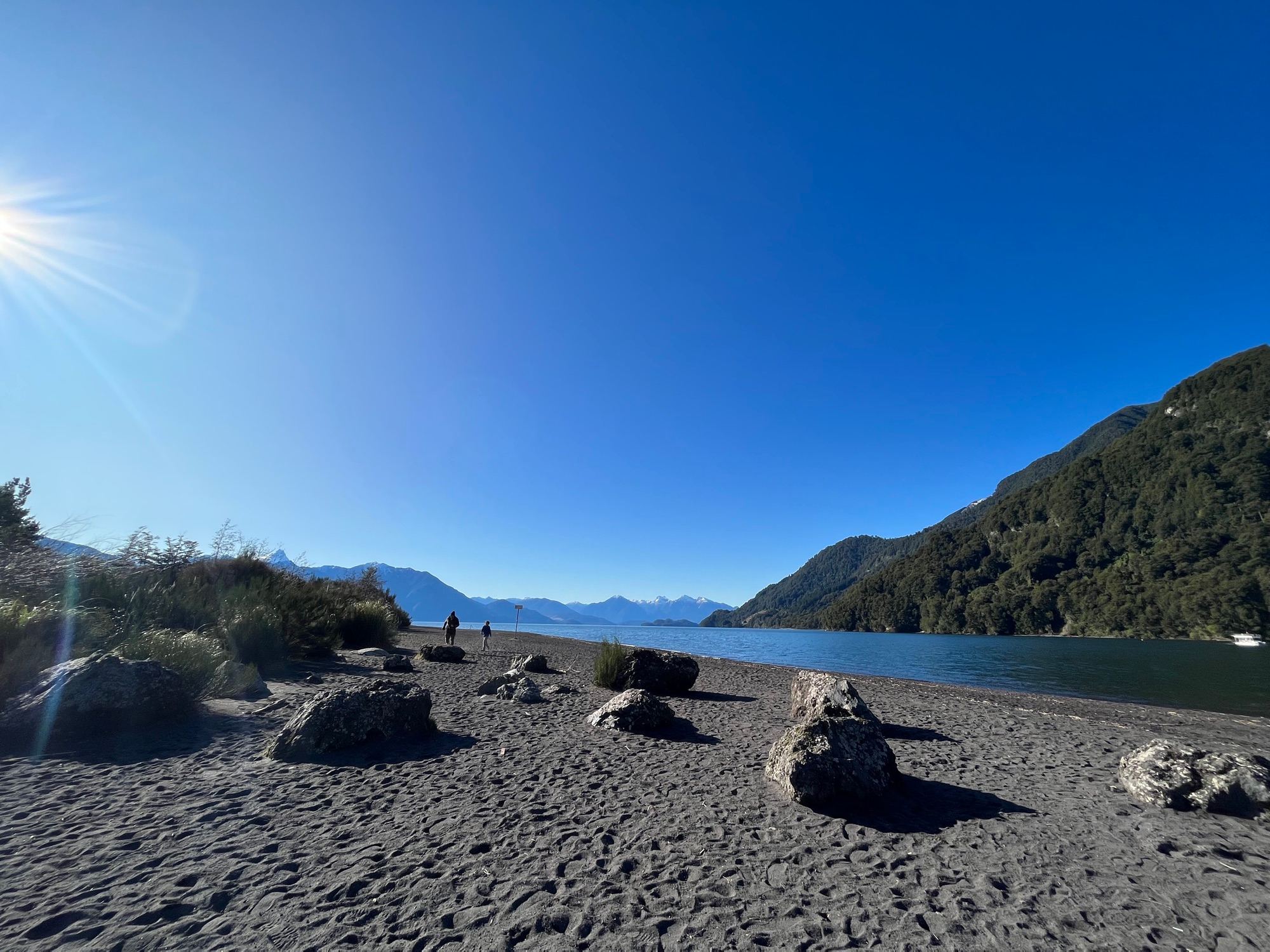
The lake where the Petrohue River begins, with the village of Petrohué on its shore. Boats to Peulla leave from there; how to plan the trip is in things to do in Ensenada.
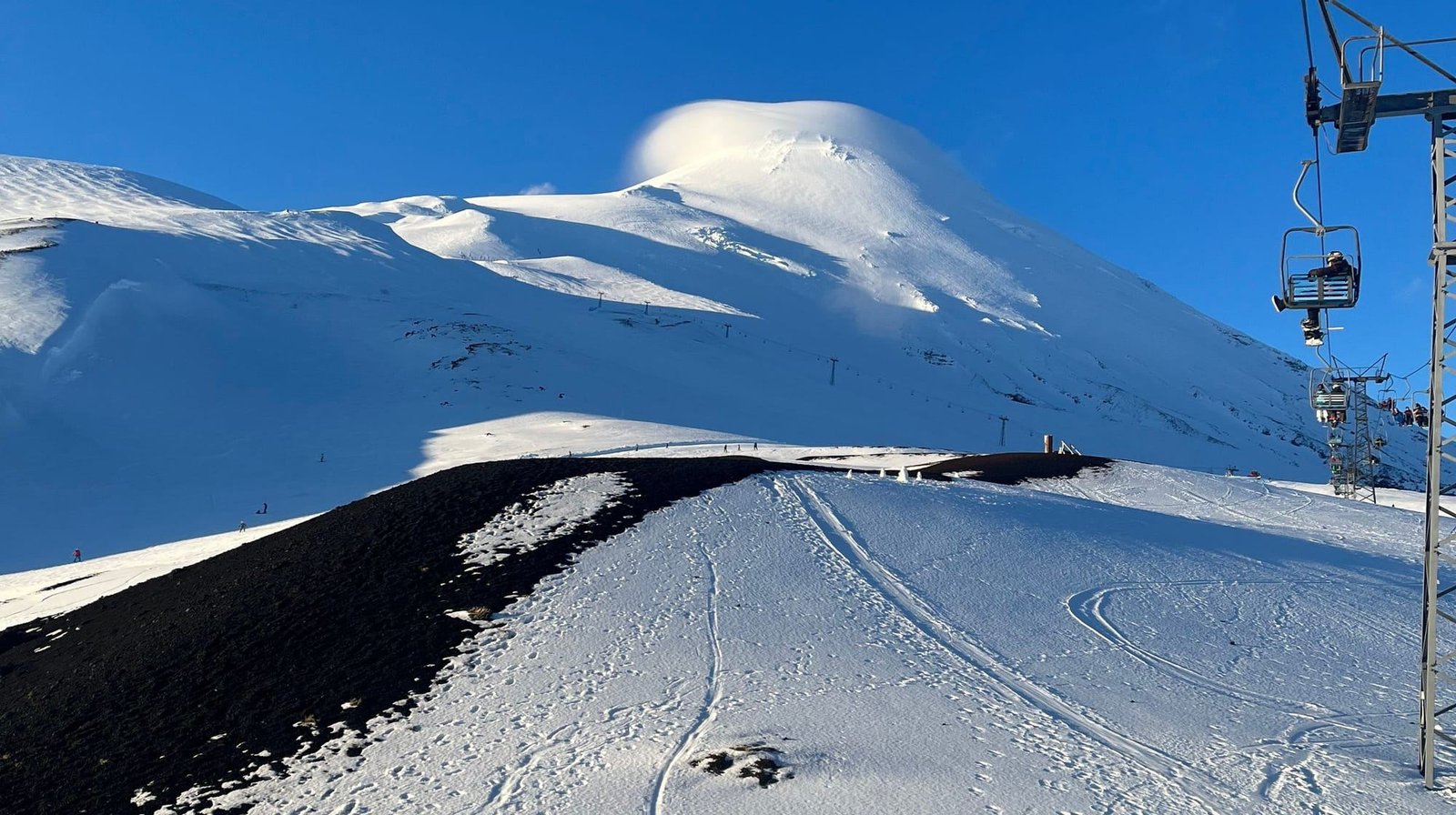
The 2,652 m volcano that dominates the park. You can drive up to the Osorno Volcano ski resort and, with a guide, climb to the summit of Osorno Volcano.
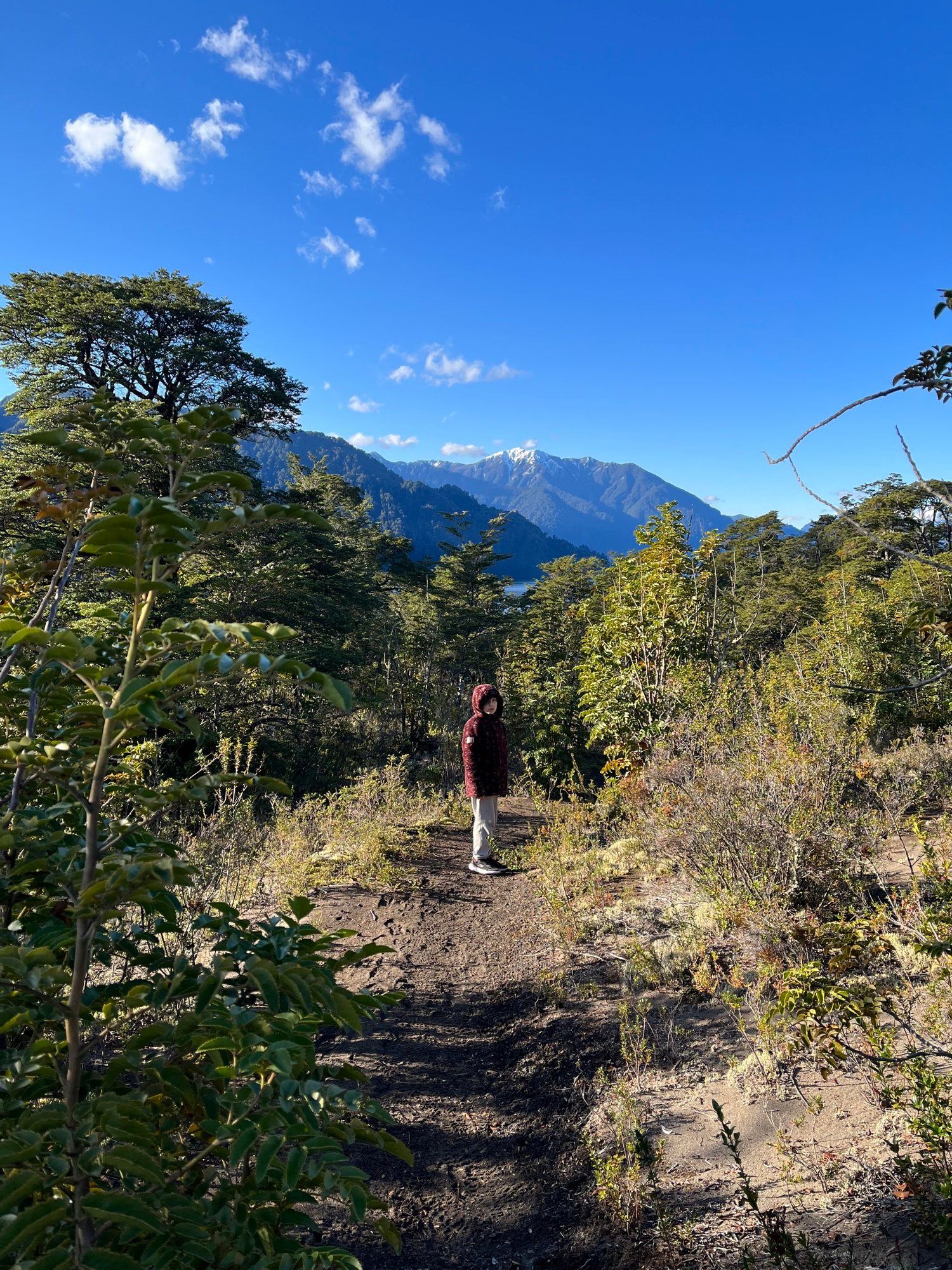
CONAF looks after trails for every level, from short walks to full-day hikes. Before you set off, register your hike with the park rangers, as CONAF asks on every trail in the park.
In the Ensenada area are the Laguna Verde trail, with universal access, and Los Pilleyos, on volcanic rock. At the waterfalls are the Saltos del Petrohué, Los Enamorados and Carilemu trails, all short.
Rincón del Osorno (2.4 km, 60 m of elevation gain) follows Lake Todos los Santos among coigüe trees over 20 m tall. Los Alerces (3.5 km, 130 m) passes 7 alerce trees that survived logging. El Solitario (5.6 km, 200 m) links the road to Petrohué with the volcano road, through forest and a volcanic mudflow. We hike Rincón del Osorno with a guide on our Rincón del Osorno trek.
It is 11.5 km with 900 m of elevation gain on the slopes of Osorno Volcano, from Petrohué toward Cerro La Picada, with views down to Lake Todos los Santos. We do it with a guide, hiking and biking, on the Paso Desolación trek and bike.
The park protects Valdivian rainforest, an evergreen temperate rainforest. Petrohué gets about 4,000 mm of rain a year; January, February and March are the driest months, and above 1,000 m there is snow all year.
Coigüe is the most common tree, between 200 and 1,000 m. Ulmo, tineo and canelo grow with it, and alerce grows between 800 and 1,000 m. Higher up, in the cold zones, there is lenga and ñirre.
The park is home to the pudú, puma, kodkod (güiña), southern river otter (huillín) and the monito del monte, a small marsupial. Birds include the torrent duck, Magellanic woodpecker, green-backed firecrown, ringed kingfisher and chucao tapaculo, heard in the forest more often than seen.
Entry is a digital pass bought at pasesparques.cl and checked at the Petrohue Waterfalls. This year's prices, opening hours and the status of the area are in our guide to visiting the Petrohue Waterfalls. Laguna Verde is free and open from 9 am to 5 pm. To confirm hours and closures, call the CONAF office in Ensenada: +56 65 221 2036.
From Puerto Varas take Route 225-CH east, along Lake Llanquihue. At km 44 is Ensenada, where the park begins and where our base is. From there the road continues to Laguna Verde and the Petrohue Waterfalls and ends at Petrohué, on Lake Todos los Santos. From Puerto Montt it is 72 km.
Buses JM runs to Petrohué and Buses Interlagos links Ensenada with Petrohué, passing the waterfalls. Minibuses leave from San Bernardo and Walker Martínez in Puerto Varas.
The Osorno Volcano road may need chains or 4×4 in snow. In heavy rain, CONAF may close the road from Ensenada to Lake Todos los Santos because of landslides: check before you go. For groups of 12 or more we run transfers from Ensenada.
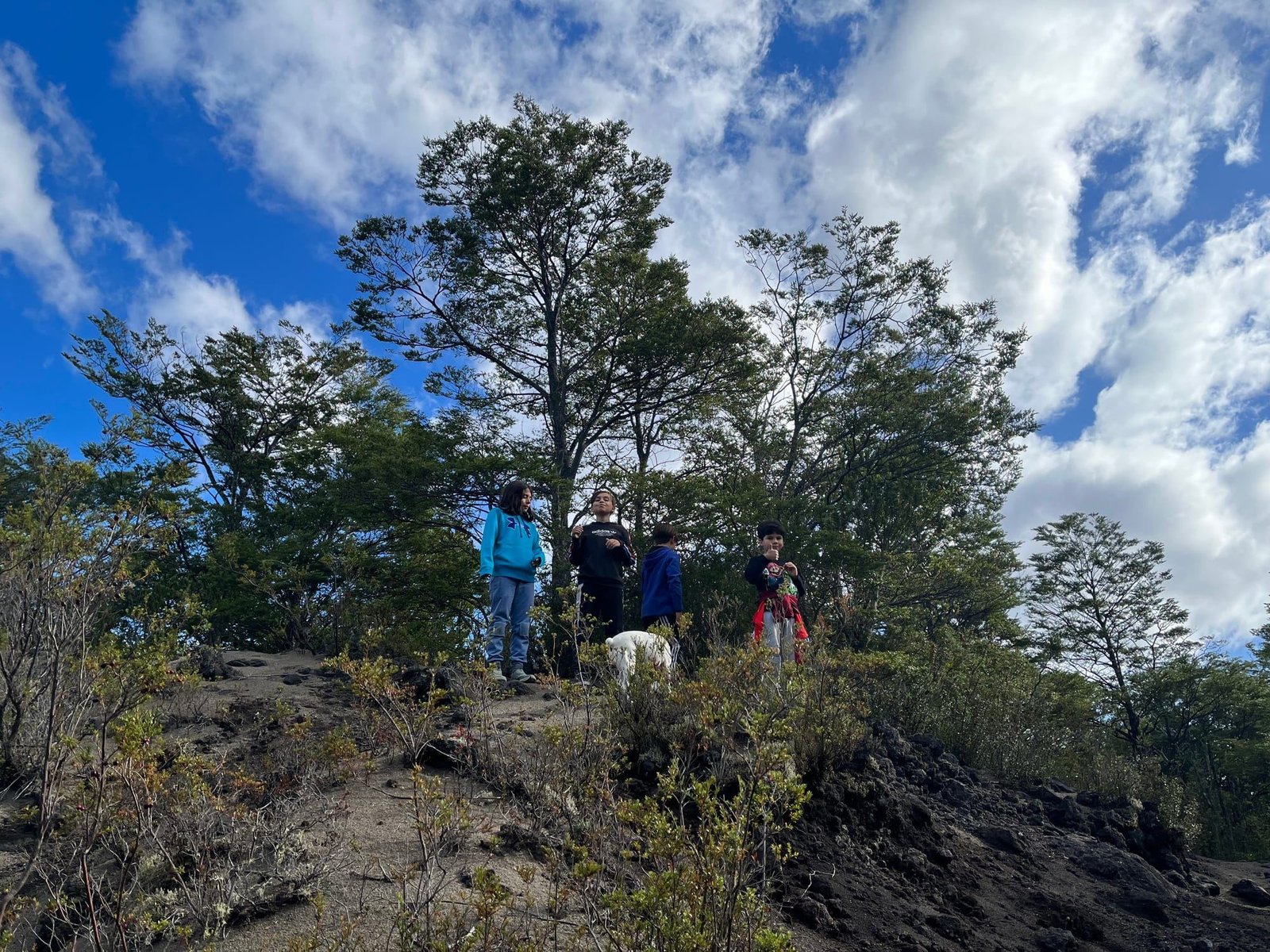
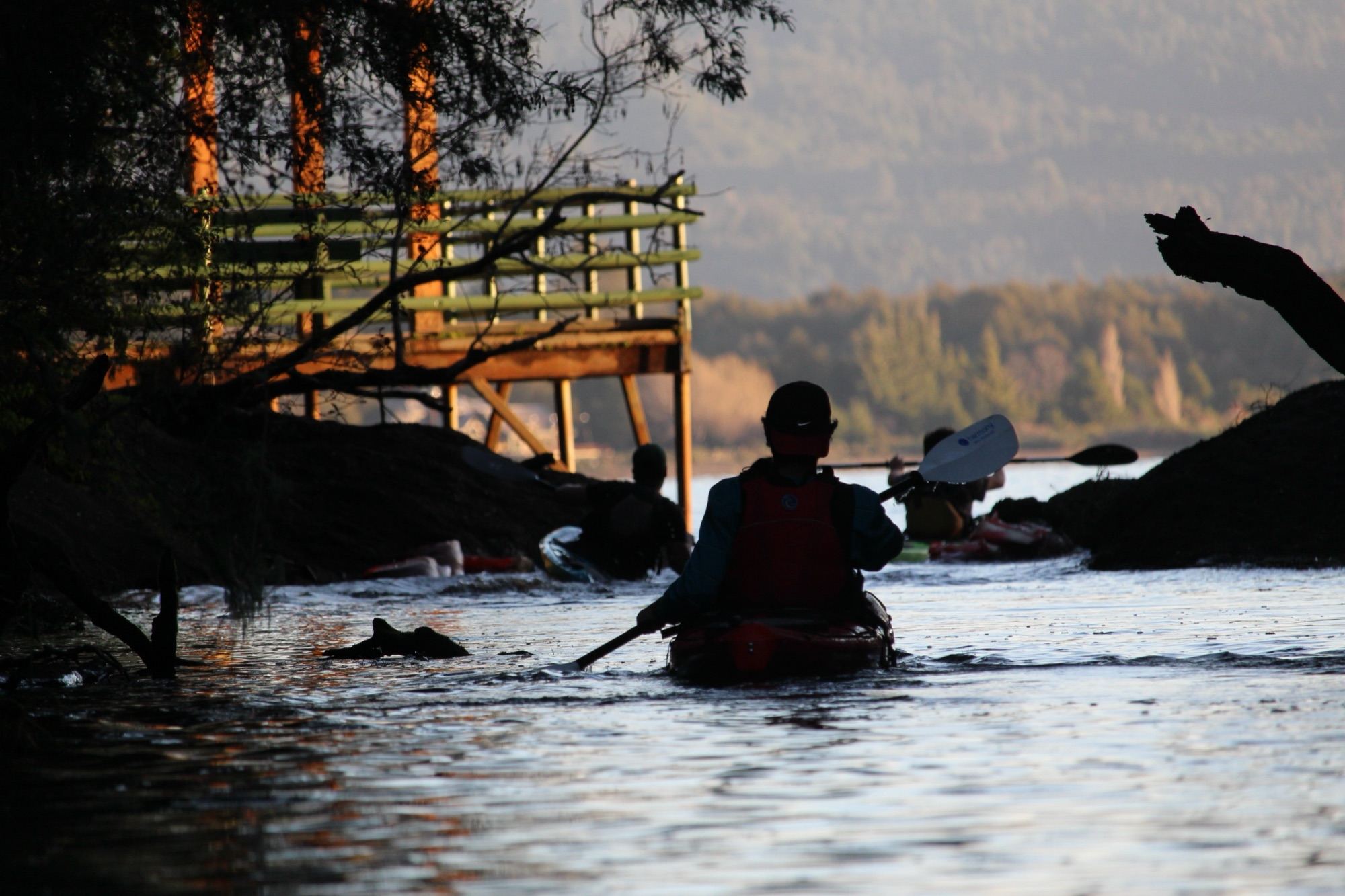
From our base, at the gateway to the park, we run the Osorno Volcano glacier trek, the Osorno summit climb and the Paso Desolación trek and bike. On the water, Petrohue River rafting runs 8 km of class III rapids, and the sea kayak tour on Lake Llanquihue follows the park shore.
Quote on WhatsApp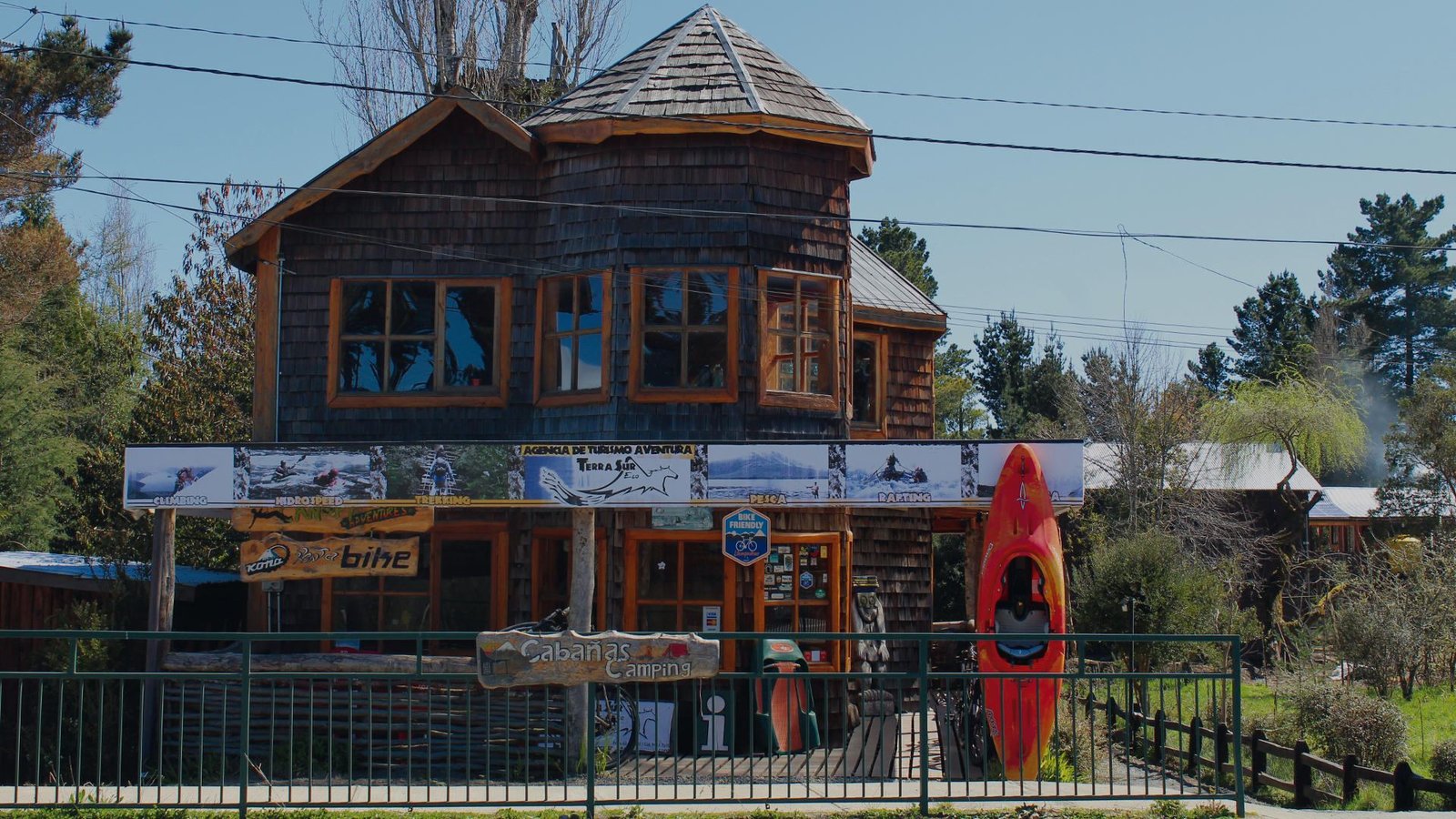
CONAF has no campsites open inside the park, and the nearest lodging is in Ensenada. Barlovento is there, the same company and base as TerraSur: cabins in Ensenada and a campsite facing Lake Llanquihue, open all year. Staying here lets you reach the waterfalls and Petrohué early, before the groups that leave from Puerto Varas.
It is in the Los Lagos Region, in the Puerto Varas and Puerto Octay districts. It begins in Ensenada, 44 km from Puerto Varas on Route 225-CH, and reaches the border with Argentina.
Entry is a digital pass bought at pasesparques.cl and checked at the Petrohue Waterfalls. The price depends on age and nationality. Laguna Verde is free.
It depends on the area. The Petrohue Waterfalls open every day from 9 am and close between 5 pm and 6 pm, depending on the season. Laguna Verde is open from 9 am to 5 pm.
Visit Laguna Verde and the Petrohue Waterfalls, take a boat across Lake Todos los Santos from Petrohué, go up Osorno Volcano and hike trails such as Rincón del Osorno or Paso Desolación.
Take Route 225-CH east: 44 km to Ensenada, where the park begins. By bus, Buses JM and Buses Interlagos run to Petrohué.
CONAF currently has no campsites open inside the park, and camping outside authorized places is not allowed. The nearest campsite is in Ensenada, at the gateway to the park.
There are short trails, such as Laguna Verde, Los Pilleyos and those at the waterfalls, and half-day or full-day hikes: Rincón del Osorno (2.4 km), Los Alerces (3.5 km), El Solitario (5.6 km) and Paso Desolación (11.5 km).
No. CONAF does not allow pets or exotic animals in the park.
On 17 August 1926. It is the oldest national park in Chile.